
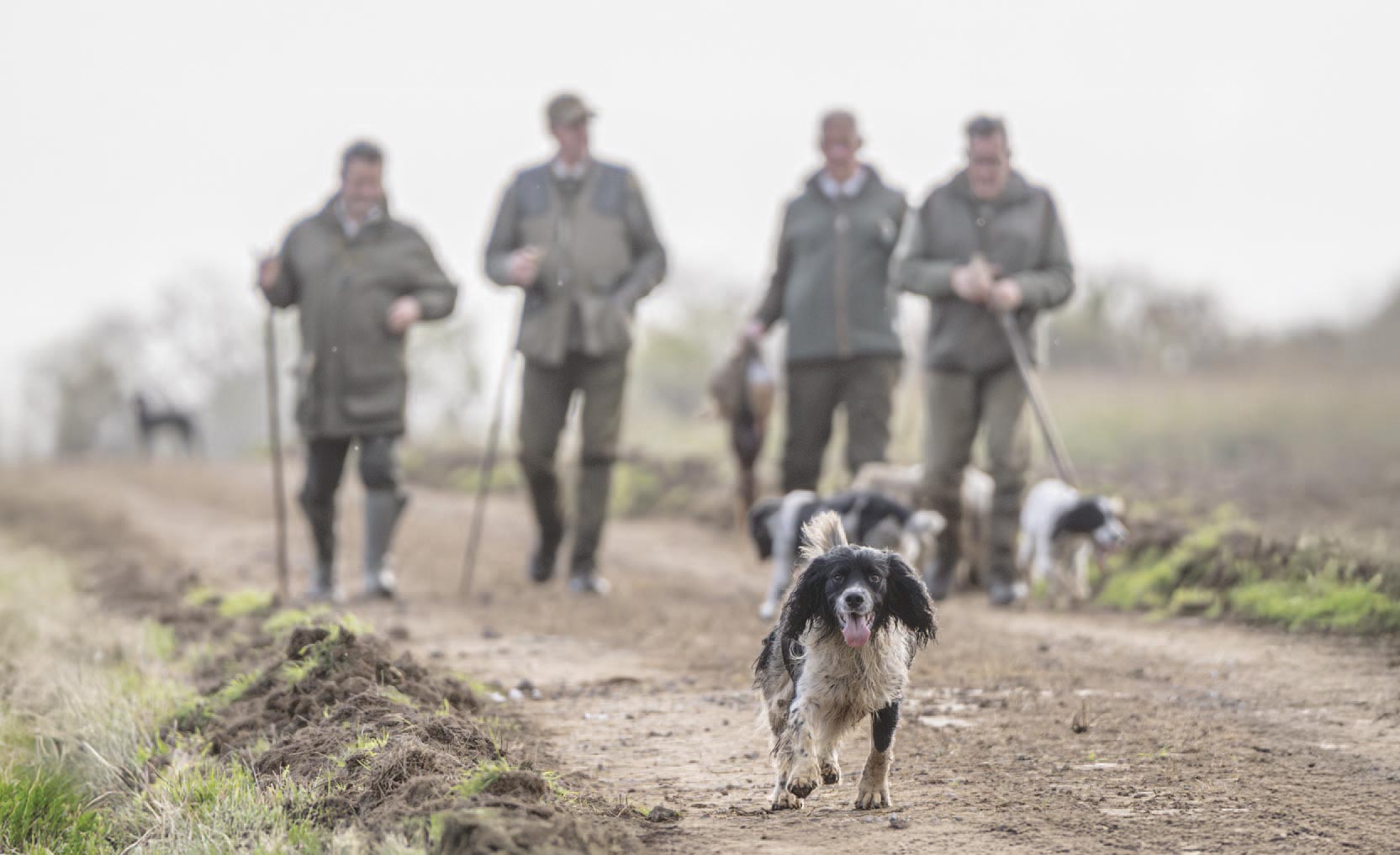
Image credit – Kenny Drew
To be clear from the outset: depression is absolutely NOT an automatic bar to shooting, and it is time to explode this myth and adopt a common-sense approach.
Recent legislation, introduced mainly in light of the appalling shooting incident in Plymouth in 2021, means that now all shotgun and firearms licences – without exception – require a medical certificate for every application. This is regardless of whether it is for a first-time grant or a renewal. But your GP may not provide this service.
Historically, one in four of us will develop a mental health (MH) issue at some point in our lives. Depression is the most common, and this statistic seems to be increasing. However, in the cohort Gen Z (those aged now up to their mid-to-late 20s), it is reported that one in four already have some form of MH issue.
Fortunately, this younger group seem able to deal with it reasonably well and often take the attitude that it’s just part of life now, and it’s OK to tell someone they’re not OK. They are more likely to seek help from their GP and other organisations, as we all should.
But, many of us older members struggle to acknowledge any problems. We (wrongly) sometimes still associate some sort of stigma with MH issues, and prefer to ‘soldier on’ with our ‘stiff upper lip’ attitude and not bother our GP. Sadly, this can be compounded by unfounded concerns that a history of depression in our medical notes might negatively impact the grant or renewal of our licence. Ill-informed comments by shooting ‘friends’ and in print and online media that “anyone with a gun licence who develops an MH issue should not consult their GP as that could prevent them from getting their certificate” do not help. In fact they can prevent some from seeking the medical help they need at the exact time they really need it.
Seeking support is the best option
The Home Office has for some time recognised that depression is not an automatic bar to being granted a certificate. It understands that many people suffer from a degree of depression during the normal ebb and flow of life, or after common events such as bereavement.
In its Statutory Guidance to the Police, it states:
“The fact that a person has received treatment in the past for certain illnesses or conditions, such as depression or stress, does not make them automatically unsuitable to possess a firearm.”
Here at ShootCert, we have been trying to get this message across for some time. It is therefore encouraging that the National Police Chiefs’ Council (NPCC) recently launched a new guide to support firearms certificate holders experiencing MH issues. It reassures holders that seeking support will be handled with understanding and confirms that firearms licensing teams are adopting a compassionate approach. This means prioritising safety, while recognising the social and recreational value of gun ownership.
We have some really good consistency here now. So, despite previous comments in the media, it’s not true to say that Police Firearms Departments are out to ‘stop people shooting’. On the contrary, ShootCert has developed excellent working relationships with the police over the last five years and I can assure you we work together on this. Please be assured that the Police Firearms Departments are there to work with you.
But remember, the granting of a licence by the police is based on both trust and confidence that you are safe to possess a gun for the duration of that licence. So, if you experience a period of depression, you must seek help.
A common case
Life events can have a big impact on our mental health, and things often change quickly. I can’t give you a real case study for obvious reasons, but what follows represents a good example of how situations develop.
Mr Jones enjoys shooting and meeting up with friends for a round at his local clay shooting club on Thursday evenings. Unfortunately, he was made redundant two years ago but was managing this reasonably well, until his wife then passed away after a long battle with cancer. He very understandably then developed a reactionary depression.
However, he did the sensible thing and presented to his GP for support. He was started on antidepressant medication and referred for counselling. He was, in fact, encouraged to continue shooting because of its positive well-being benefits. He looked forward to shooting and the company this brought.
When his licence came up for renewal, his supportive GP advised that he come to ShootCert for his medical certificate, as the surgery does not provide this service. Rather than just stating that he suffered from depression requiring treatment – which raises more questions than answers for the police – our report will give context.
We would write something like:
“Mr Jones developed a period of depression two years ago. The clear catalyst for this was an unfortunate redundancy compounded by bereavement when his wife passed away. He sensibly attended his GP for support and was given a short course of antidepressant medication. He was also referred for bereavement counselling, which he attended. He recovered well, and six months later stopped taking antidepressants. He has remained fit and well from this point of view since then. As such, this episode was reactive, isolated, and now historic.”
In our experience, the police will look favourably on his application along with his medical certificate, and his licence should be renewed as a routine.
The wrong approach
Conversely, Mr Jones could have taken advice on social media and decided not to see his GP for support but to ‘soldier on’ the best he could. In this scenario, the depression could get worse with no treatment or even acknowledgement.
When asked for a medical certificate to support his renewal application, there would be nothing to report, as he had not presented with any symptoms. However, he would be clinically depressed, and this could quite easily be getting worse. It is clear to see which approach would be beneficial for our long-term health.
What should you do?
Firstly, and most importantly, discuss the matter with your GP and plan how to treat your depression. Your personal well-being comes before anything else.
Keep your local firearms department informed. The police quite rightly consider it an honesty issue to fail to declare matters of relevance.
If your GP does not provide this service when you do need a medical certificate, go to a reputable specialist third-party provider such as ShootCert.
Most importantly, keep on shooting. Whether you are shooting, beating, picking up, driving the game cart, or preparing the sandwiches for lunch, the benefits of shooting for all participants are well established. An evening with the shoot dinner or just a chat in the Dog and Duck afterwards are some of the best ways of helping MH issues and fighting loneliness.